A jacket sample comes back from the wash test with a hood eyelet hanging loose, and another has torn through the shell fabric. Nothing is wrong with the design. The problem is often that someone picked the wrong garment eyelets, meant to hold on thin cotton plackets, and put them on a quilted, three-layer jacket. Winter wear is a different job for a small piece of metal, and the specification needs to reflect that before bulk cutting starts.
Why Winter Garments Ask More of Their Eyelets
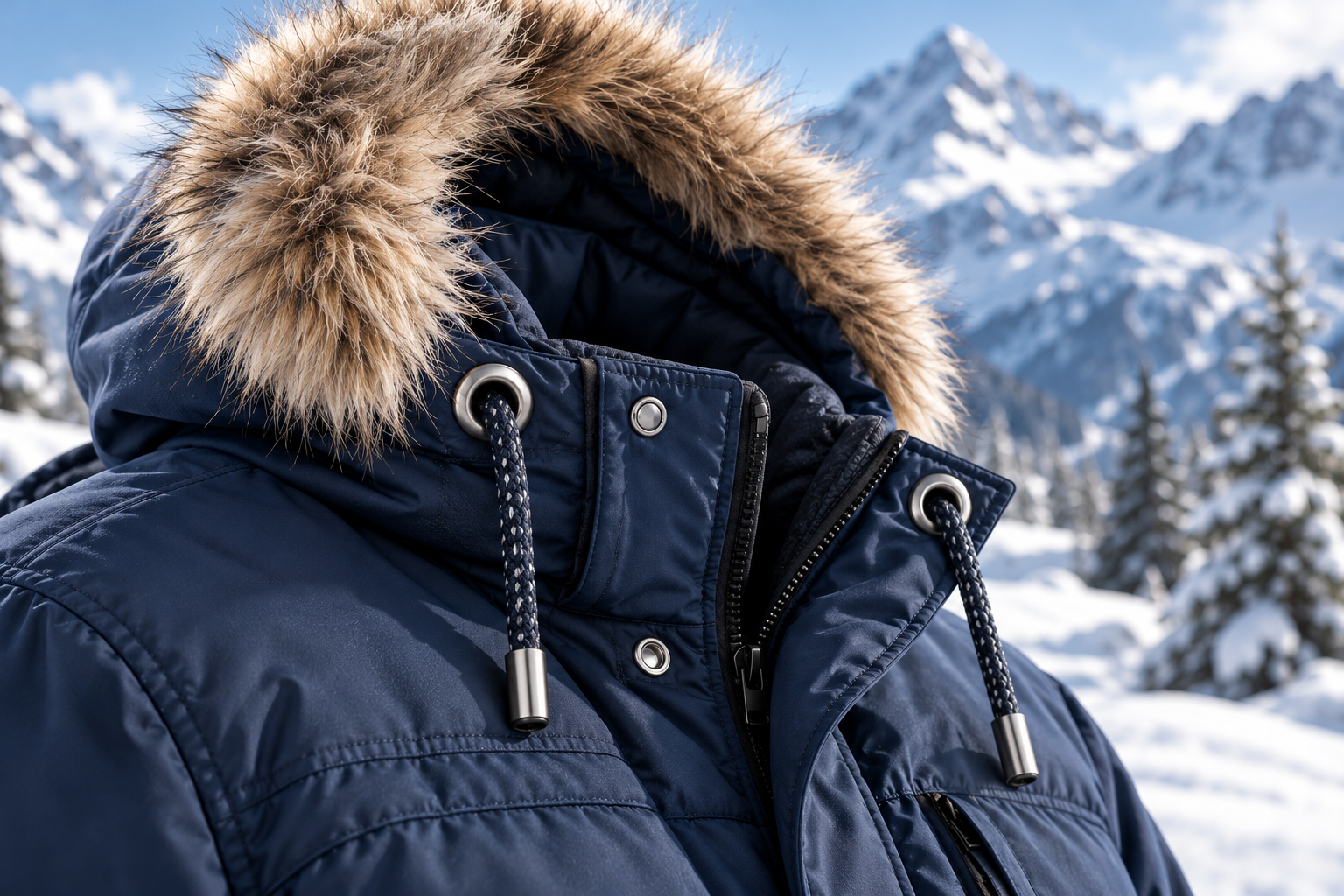
Think about what a jacket eyelet actually sits in, for instance, the kind of fabric & multiple layers. There is a shell fabric, then insulation, then a lining, and sometimes tape or internal lining at the hood’s mouth. That stack is far thicker than shirt fabric, and it’s springy, which means it pushes back against the eyelet from the moment it’s set.
Then comes the utility conditions of these jackets: hood and hem drawcords get yanked, often by someone who wears gloves, which is not gentle at all, and every pull loads the metal ring and the fabric around it. Add damp weather and repetitive washes to this list, and the demands on garment eyelets for cold-weather wear are very different from those on a summer top.
Barrel Length: Match the Metal to the Fabric Stack
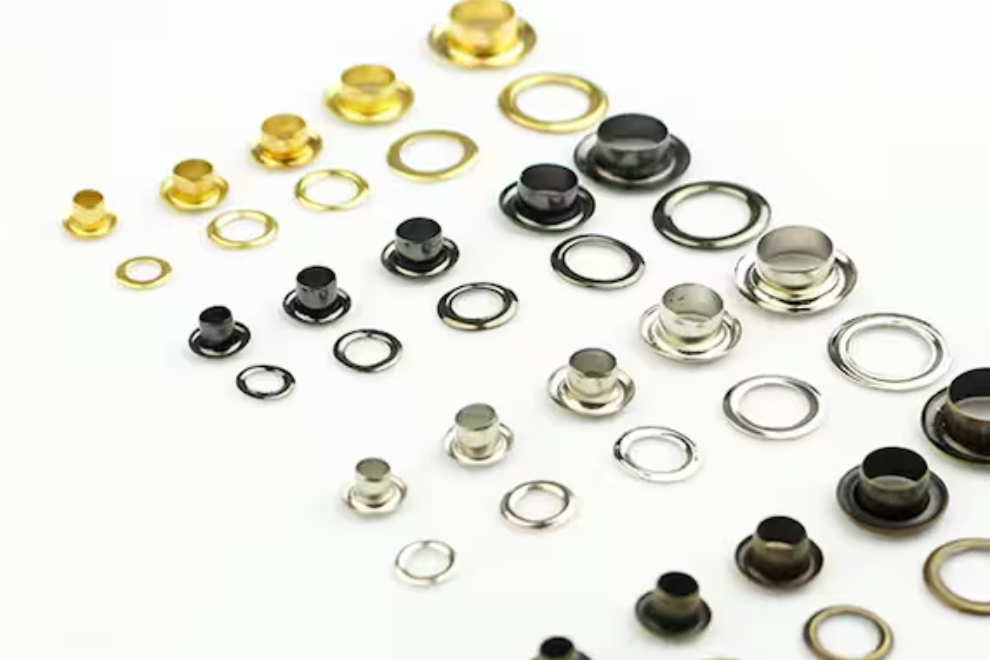
Plenty of spec sheets list inner diameter and stop there. For thick fabrics, the barrel length- the height of the tube that passes through the fabric-matters just as much, which is ignored by many while they list the requirements. Too long and the barrel can collapse and look messy. Too short and it may not catch the washer. Shorter barrels suit thin shells, while long-barrel eyelets suit thicker or layered material.
There is a catch. Check the eyelet, washer, fabric and die as one combination, since barrel height changes how the closure turns out. A sample that looks fine on a single layer of shell fabric tells you nothing about the same eyelet on the full stack with insulation.
Ask your supplier: What barrel height do you recommend for a fabric stack of this thickness, and can I see it set on my own sample?
Why Eyelets Tear Out of Thick Fabric?
When an eyelet tears out, it is usually the fabric that has given up, not the metal. That is why a washer on the reverse side matters: it spreads the load, and heavy fabrics need that extra support to stop the eyelet from pulling through under tension.
Fabric reinforcement is the other half. Reinforce the area with fusible interfacing or an added fabric layer, and remember that knit fabrics need noticeably more stabilisation than wovens. That matters for fleece and jersey-based hoodies, where fabric weight can run from 260 to over 500 GSM, and the material still stretches around the hole.
Hole size plays in too. Punch it slightly smaller than the barrel, and the fabric grips the metal snugly. Make it too large, and the eyelet spins freely, which is the first sign it’ll work loose.
Brass, Stainless Steel or Aluminium for Cold-Weather Garments
Winter garments spend more time in damp conditions than summer wear, so corrosion is a real concern. Rust after washing is a common complaint with garment eyelets, and it often traces back to the base metal or a thin plating.
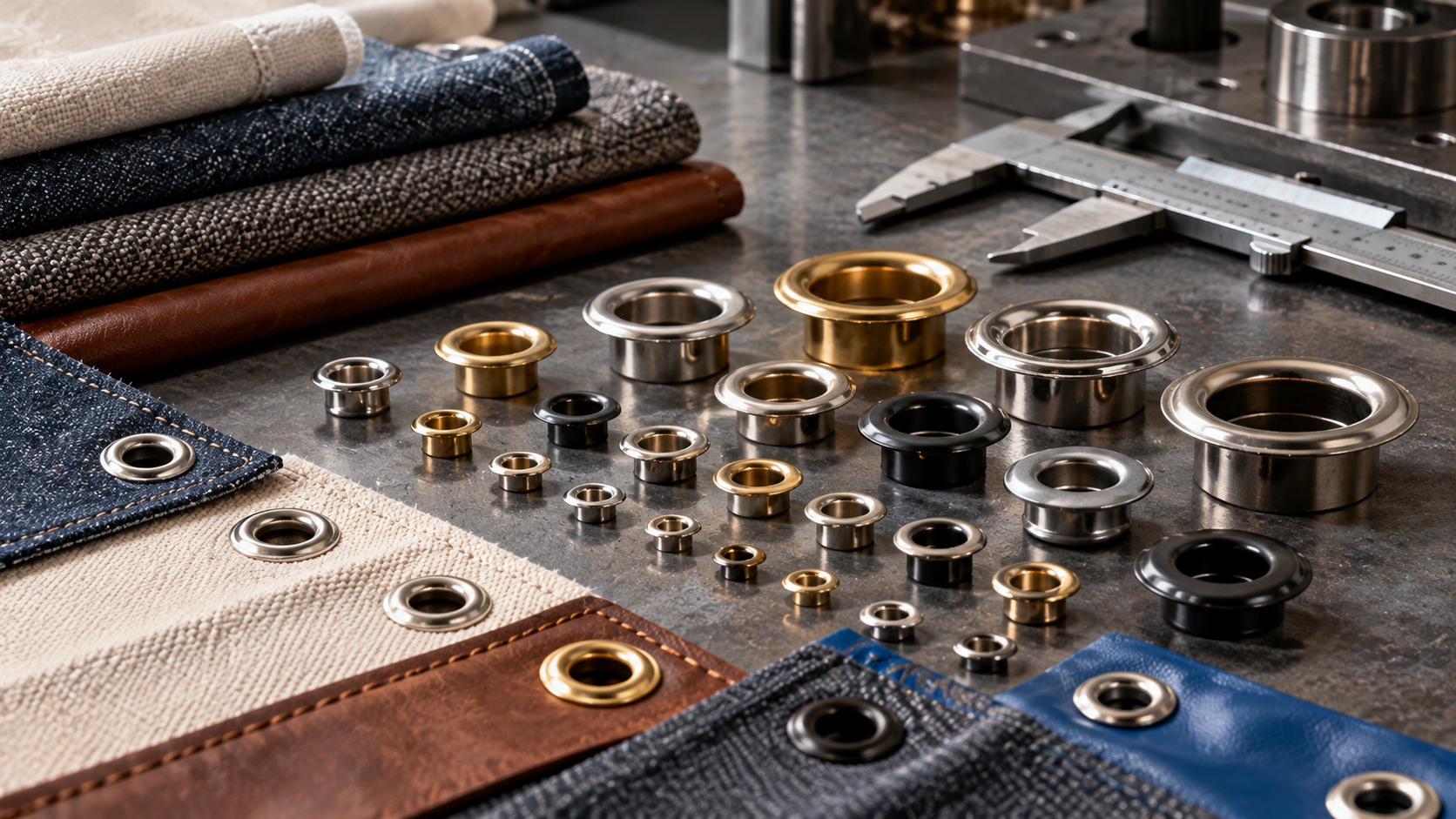
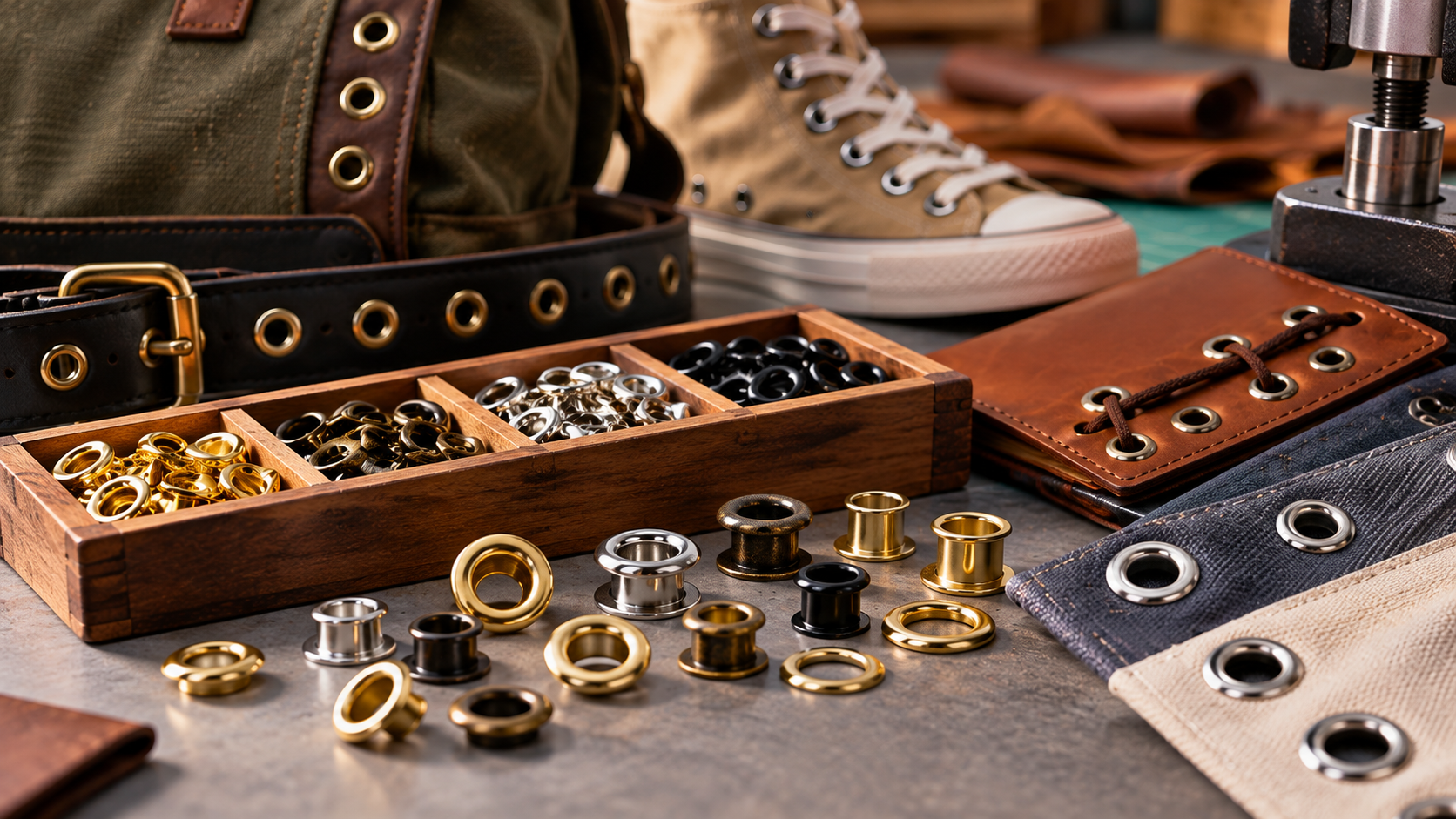
Each metal has a place. Brass eyelet is the usual choice for jackets and workwear hoods: it is durable and doesn’t rust the way plain steel does. One insulated hooded work jacket on the market pairs 12-ounce cotton duck cloth and polyfill lining with antique brass eyelets at the hood, a sensible pairing for rough use. Stainless steel eyelets suit heavier outerwear where strength and corrosion resistance both count. Aluminium eyelets are light and corrosion-resistant, which makes them a sensible pick for lightweight shells and padded jackets where weight matters. Finish matters too, so ask for samples in the exact colour you plan to use, because a dark or antique finish can look different once it’s set.
In a wash test, look for rust marks or discolouration around the eyelet, and for any looseness when you twist it. Both are far easier to fix at sample stage.
Size Variation for Drawcords: Hoods, Hems and Waist Channels
Eyelet size follows the cord, not the other way round. One hoodie tech pack guide puts typical drawcord width at 5 to 8 mm and recommends an eyelet hole about 2 mm wider than the cord so it slides smoothly. Check the aglet or cord tip too, so a fat tip doesn’t jam in the hole.
Position needs thought as well. Keep eyelets clear of seams and edges, since a hole too close to the fabric edge puts the stress where the cloth is weakest. For hoods, test with the cord pulled hard at the opening, then wash the sample and test again. A cord that runs smoothly on day one but snags after washing can point to a rough edge on the metal, and that is worth catching before bulk production.
Setting the Eyelet: Machines, Dies and Sample Runs
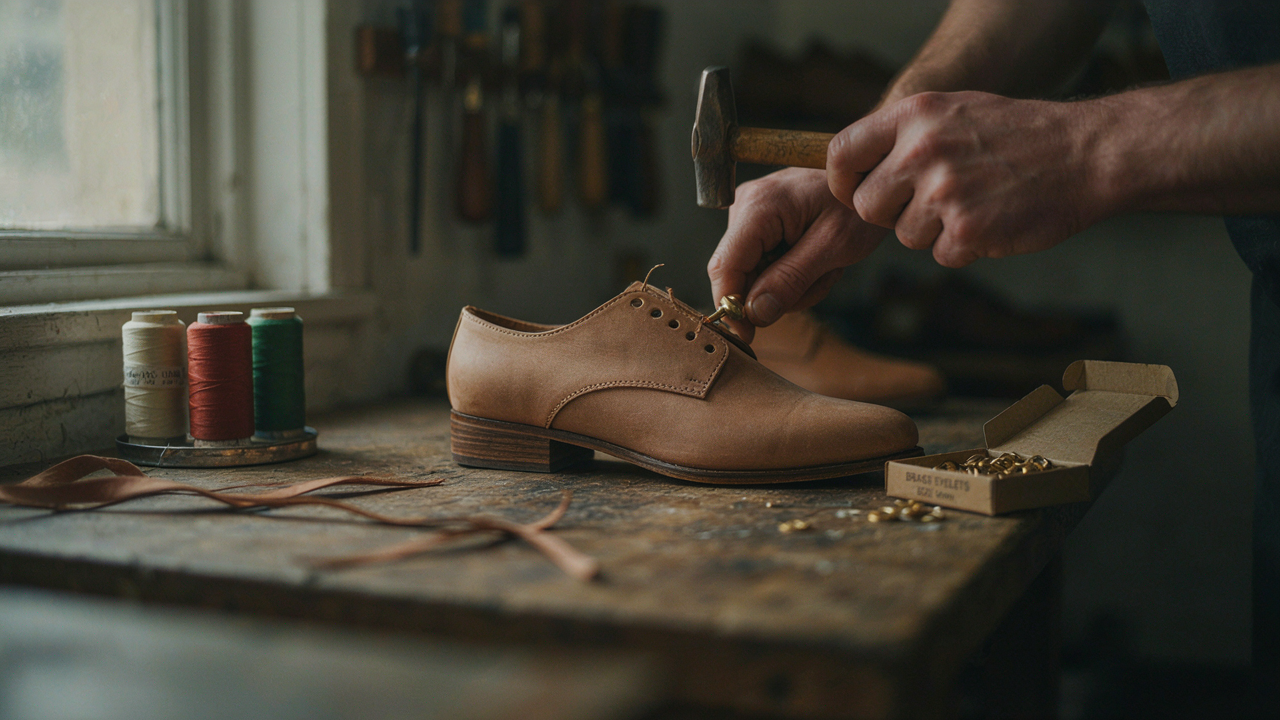
Even a well-chosen eyelet fails if it’s set badly. A weak or uneven crimp leaves a wobble that grows with every pull, so check the back of every setting: the washer should sit tight around the barrel with no gap or play. For thick stacks, the press needs enough force, and the die has to match the eyelet, which is why setting equipment and hardware are best specified together.
Simran Eyelets covers both sides of that pairing. As a DPIIT-certified trading house, it supplies aluminium, brass and stainless steel eyelets, plus manual, semi-automatic and fully automatic garment eyelet punching machines and precision dies, so a garment unit can match the eyelet to the equipment that sets it. Stock is held for bulk dispatch to manufacturers and distributors across India, which helps when winter orders have tight delivery windows.
Specifying Garment Eyelets for Your Next Winter Line
Efficient garment eyelets for winter wear come down to a handful of decisions made early: the barrel length for your actual fabric stack, a washer and reinforcement that spread the load, a metal that survives damp conditions, a hole sized for the cord, and a setting die that matches. Get those right on one properly built sample and bulk production gets much calmer.
If you are sampling a winter line, send Simran Eyelets your fabric stack thickness, cord width and finish preference, and ask for eyelets and setting guidance to match. Winter collections are usually planned well ahead of the season, so the eyelet decision should not wait for the final fitting. A short conversation now is cheaper than a returned jacket later.