Eyelet Size Chart: How to Choose the Right Eyelet for Your Fabric and Product
Whenever a manufacturer or customer calls asking for “an eyelet for a banner”, the next five minutes go to questions because of the lack of clarity. How thick is the material? What goes through the hole? An eyelet size chart should answer that before the call, but a chart that lists only one measurement leaves you with ambiguity about the rest. This guide shows you how to read an eyelet size chart properly and match the right series to your fabric and product.
Reading an Eyelet Size Chart: Four Measurements That Matter
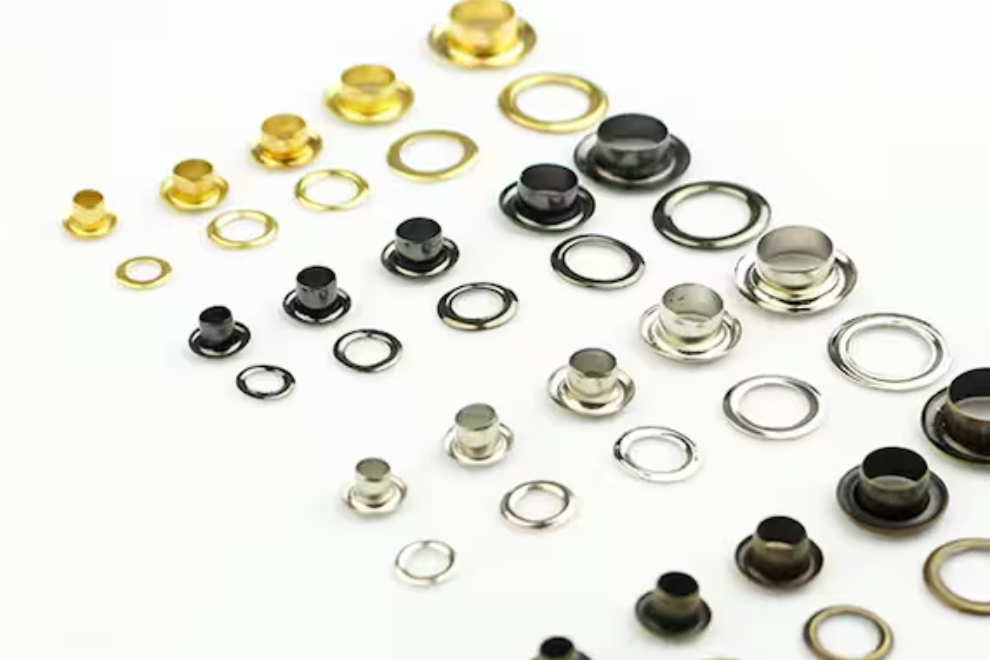
Every useful eyelet size chart centres on the same few measurements. Inner diameter is from where the start of the cord or lace passes through; outer diameter is the full width, which also includes the flange; and barrel length is the height of the tube that goes through the fabric. The fourth is the washer, which sits on the back and locks everything in place. Leave out any of the four, and the order is incomplete, because the size of the eyelets always matters a lot, or the whole batch of product will be messed up.
Many buyers usually make a mistake and mix up the internal and external diameter of the eyelet. A buyer who says “5 mm” might mean the opening or the full width, and those are two different parts. So always say which you mean, because even that minute mistake of 1mm can make a very big difference. The hole you punch in the fabric follows the barrel diameter, not the inner or outer figure.
Eyelet Series Numbers Explained: 200, 800, 1300 and More
Not every chart speaks in millimetres. Some use inch-based numbers like #0, #1, and #2, while Indian eyelet trade often uses series numbers such as 200, 600, 800, and 1300, plus plain numbers like 28 and 30. Series codes are how suppliers name a particular eyelet style, and they’re quick shorthand for what it’s typically used for. Treat them as a starting point, not a spec: confirm the exact millimetre dimensions on the supplier’s chart before you order.
Here is how the series covered here are typically used:
| Series | Material | Typical use |
| 200 | Aluminium | Tags |
| 600 and 700 | Aluminium and brass | Shoes |
| 800 | Aluminium | Banners, garments, hoodies |
| 1300 | Aluminium | Tarpaulin (tarpaulin) |
| 1300 | Brass | Canvas |
| No. 28 and 30 | Brass | Canvas, tarpaulin |
From Tags to Hoodies: Choosing a Series
Tags take the 200 series in aluminium. Tags are small, thin and lightly handled, so a light aluminium eyelet does the job without adding weight.
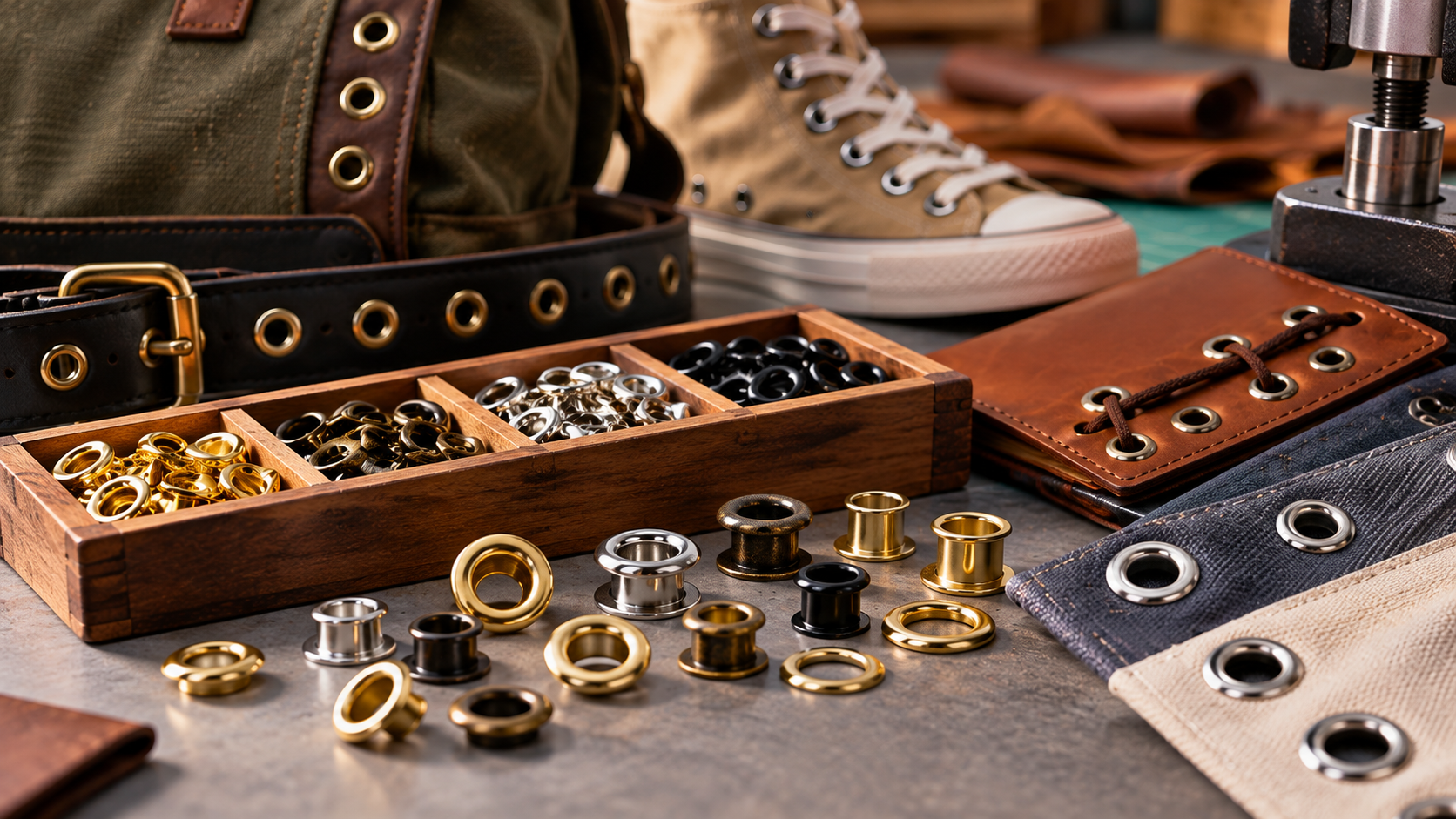
Shoes use the 600 and 700 series, in aluminium or brass. A shoe eyelet takes lacing pull day after day, so the metal choice depends on how hard-wearing the shoe needs to be. Brass is sturdier, while aluminium is lighter.
Garments, hoodies and banners use the 800 series in aluminium. On a hoodie, the opening has to suit the drawcord. On a banner, it has to hold when the vinyl is pulled tight. In both cases, check the barrel length against your material before you commit.
Read these pairings as recommendations, not rules. If your product sits between two categories, such as a canvas bag with a drawstring, describe the use and the fabric rather than guessing a series.
Tarpaulin (Tarpatri) and Canvas: 1300 Series Brass Eyelets
Tarpatri (tarpaulin) takes the 1300 series in aluminium. Canvas takes the 1300 series in brass, and No. 30 and No. 28 brass eyelets suit both canvas and tarpatri. Both are tough, tightly woven materials, and their eyelets sit at edges that get tied down and pulled hard, often outdoors.
Brass earns its place here because it is corrosion-resistant, and it does not give up when someone ties a rope to a corner eyelet and pulls hard. Aluminium has a different advantage: it keeps the tarpaulin lighter, which helps when the sheet is folded and carried often. If the job will see a lot of rain, ask about the finish as well as the series number.
Start With the Cord: Get the Inner Diameter Right
Work backwards from what passes through the hole. The inner diameter should be at least 1 mm larger than the cord. For a 3 mm cord, 4 mm eyelet works; for a 5 mm drawstring, look at 6 to 7 mm. Go much bigger and the cord slides around with too much play. Go smaller, and it binds, which is the first complaint a wearer will make.
Measure the actual cord, including any knot or tip, not the size printed on the packaging, because the widest part has to pass through the hole.
Fabric Thickness: Barrel Length, Washers and Hole Size
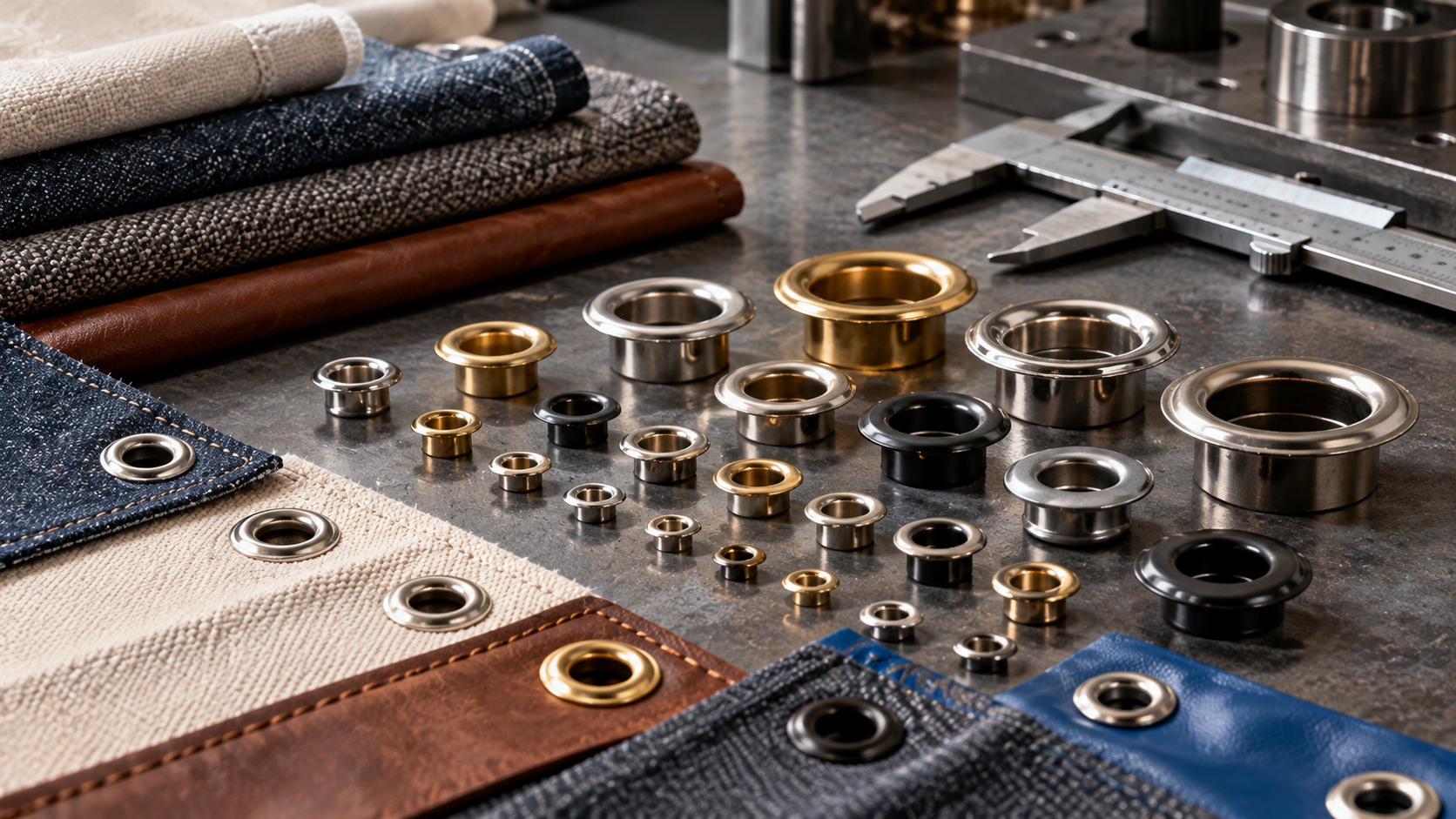
Barrel length must cover every fabric layer plus any reinforcement tape, with a little extra so it can be set. One supplier guide puts that margin at roughly 1.6 mm (about 2/32 inch) beyond the material thickness. A barrel that’s too short won’t grip, and one that’s far too long collapses and looks messy.
Then check the washer. Its inner opening should be slightly larger than the barrel, but not much. If it’s too wide, the barrel flares inside the washer instead of gripping its edge; if it’s too narrow, it won’t pass through at all.
Here’s how that plays out. Say you are making a hoodie with a 5 mm drawcord and a hood facing built from two layers. The cord points you to an opening of 6 to 7 mm. The fabric stack sets the barrel length. Then you ask which 800 series size covers both, and you set a sample to confirm.
What to Tell Your Supplier Before You Order
A proactive analysis saves a round of emails and constant changes caused by initial communication gaps about measurements. Properly mention the inner diameter, the metal and finish you want, the barrel length, and what the eyelet’s utility is: tags, shoes, a hoodie, a banner, tarpatri or canvas. Define the thickness of the fabric and the width of cord or rope beforehand. One size guide recommends ordering samples before bulk production, and that’s sound advice, because a sample set on your own material settles questions no chart can.
Using an Eyelet Size Chart With Simran Eyelets
Simran Eyelets supplies eyelets in aluminium and brass, with stainless steel available too, plus punching machines from manual to fully automatic and the precision dies that go with them. So the eyelet and the machine setting it can be chosen together. Not sure which series fits your product? Send your fabric thickness and cord width, and ask for the dimensions in millimetres. An eyelet size chart only helps once it’s checked against your real material, and a few minutes on the numbers now can save you a rejected batch later.