Ask ten buyers what they need, and most will say “metal eyelets.” That is the problem; this generic answer creates ambiguity on the supplier’s end. The phrase covers a stationery eyelet that weighs almost nothing and a tarpaulin eyelet that holds a truck cover down at highway speed. They share a hole and little else. Anyone searching for what a metal eyelets manufacturer in India offers should first sort through the types of metal eyelets, because material, size, and finish determine performance and what every thousand pieces will cost. This guide covers each type of metal eyelet, where it fits, and what to check before you order in bulk.
Aluminium eyelets: light, economical and easy to set
Aluminium is the default when weight and cost per thousand matter more than looks. Binders, paper tags, packaging and lighter fabrics all suit it. It resists rust on its own, which is why it holds up in stationery and paper products without much fuss.
The trade-off is strength. Under heavy pull, aluminium is the first to deform, so it’s a poor pick for a work boot or a load-bearing cover. Our aluminium range runs in 200, 600 and 700 series, and sizes vary a fair bit even within this one material.
Brass eyelets: for when the eyelet is part of the design
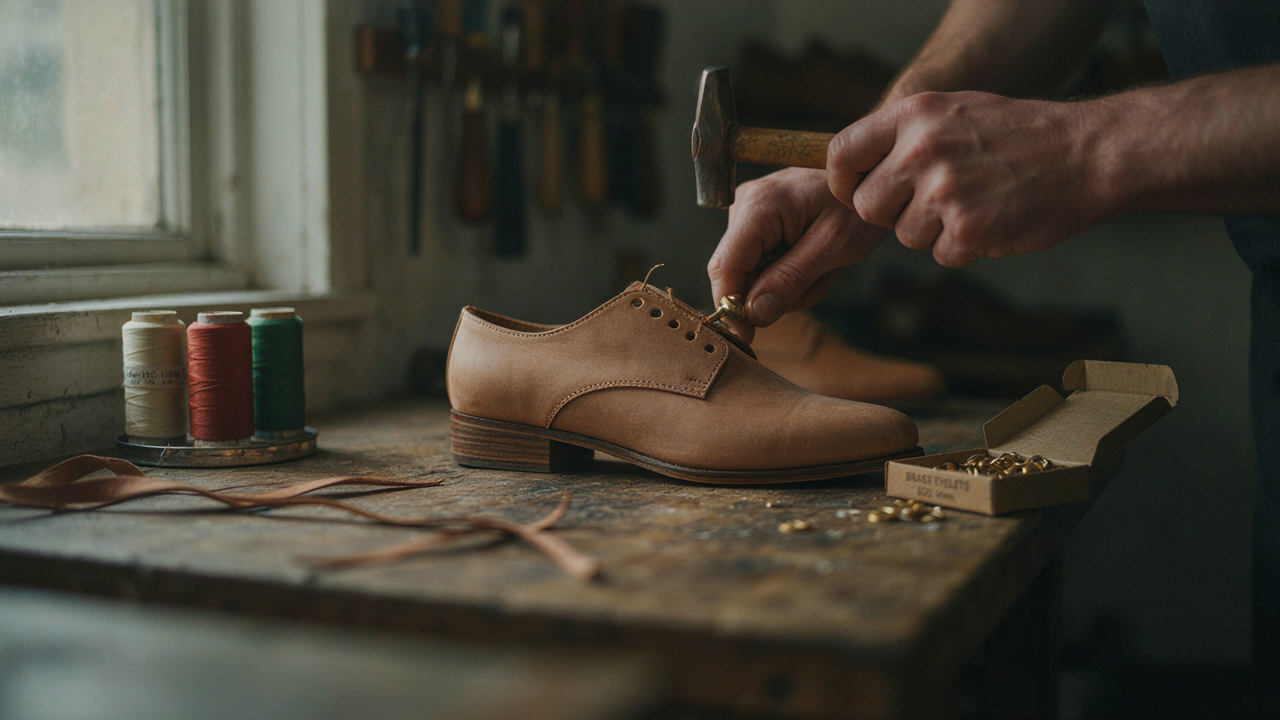
Brass costs more, and buyers pay for it because the eyelet is visible. Footwear, leather goods, fashion garments and accessories all sit here. Brass forms cleanly, takes plating well and resists corrosion, so a nickel or antique finish stays put through months of handling.
A dull or pitted eyelet makes a shoe look cheap, no matter the leather’s value. If footwear is your line, our earlier post on eyelets in footwear manufacturing goes deeper.
Steel and stainless steel eyelets: built for load and weather
Standard steel is the economical general-purpose option for utility work and packaging. It needs a proper finish, since bare steel rusts.
Stainless steel sits at the other end. It’s for outdoor use, damp conditions and heavy industrial work, where an eyelet gets pulled, rained on and pulled again. It’s also tougher, so it demands more of your press and dies. If you run your own line, confirm your machine and tooling can set stainless cleanly before switching a running product over.
Tarpaulin eyelets: a size class of their own
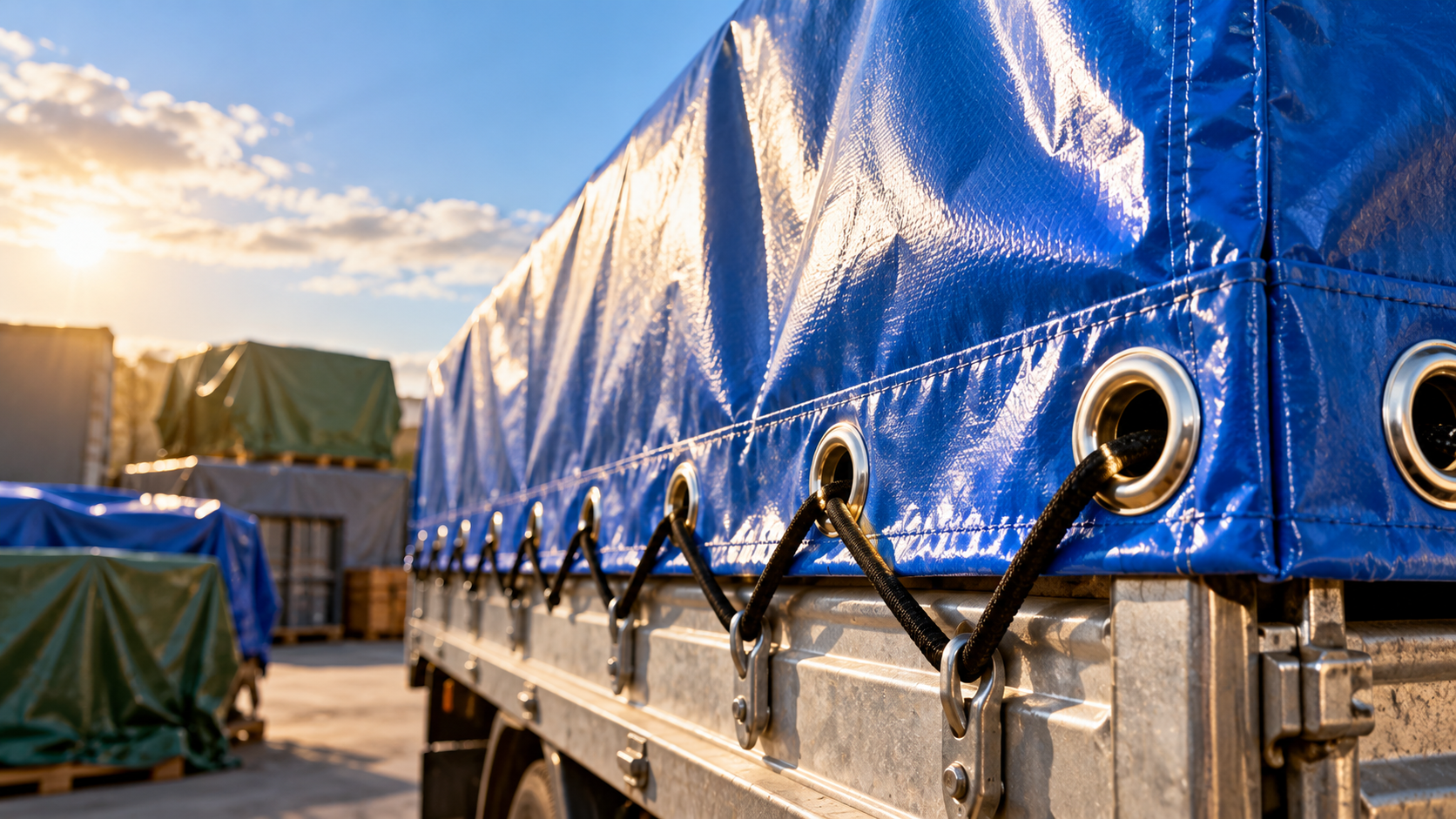
Tarpaulin eyelets are larger and reinforced because the fabric around them takes real strain from wind, load and repeated tying. You will find them on truck and trailer covers, crop covers, tents, canopies and event banners.
On our range, the aluminium/steel variant has a 12.80 mm outer diameter, a 23.00 mm collar and a 6.70 mm height. The brass variant measures 12.00 mm, 23.00 mm and 7.00 mm. Choosing between them mostly comes down to finish and how long the cover will last outdoors.
The wide collar matters as much as the barrel. It spreads the pull across more fabric, which is what stops a cover from tearing around the hole long before the eyelet itself gives up. That is why a standard eyelet is no substitute here.
How to read an eyelet spec without guessing
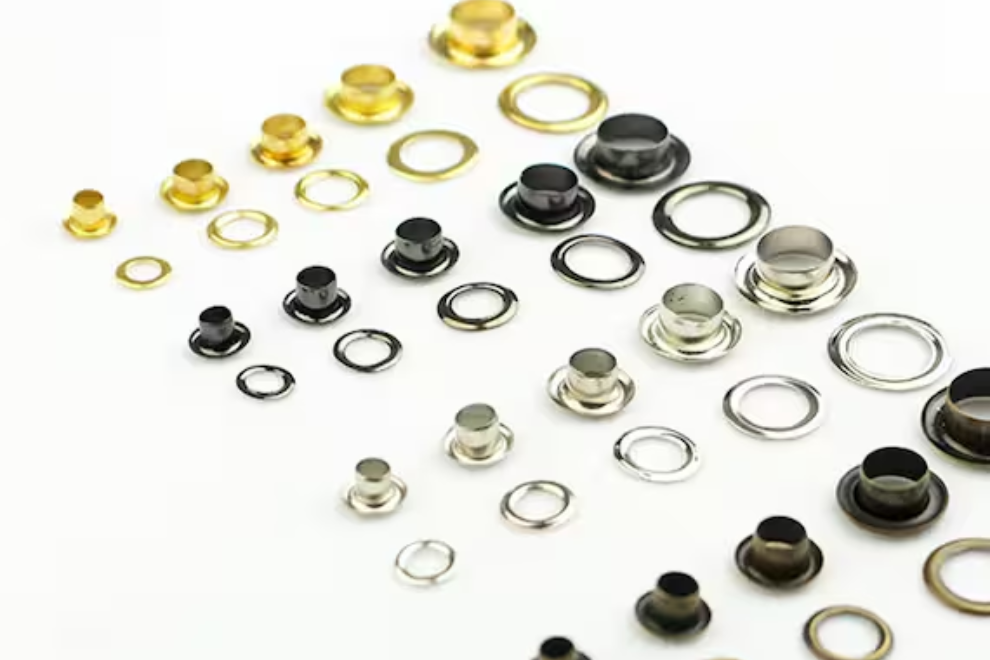
Nearly every quote lists three measurements: outer diameter, collar, and height.
- Outer diameter has to match the hole you punch.
- Collar is the flange that sits on the fabric face and spreads the load.
- Height is the barrel length. If it’s too short, it won’t roll properly through your material. Too long and it curls untidily.
Finish is the other half of the description. Two suppliers can both say “brass eyelet” and mean different things, so ask for sizes in millimetres and the finish by name: nickel, black nickel, antique, lacquered. Never settle for a product name alone, as different types of metal eyelets can be available with the supplier and you need to know which one is appropriate for you.
Finish matters as much as the metal.
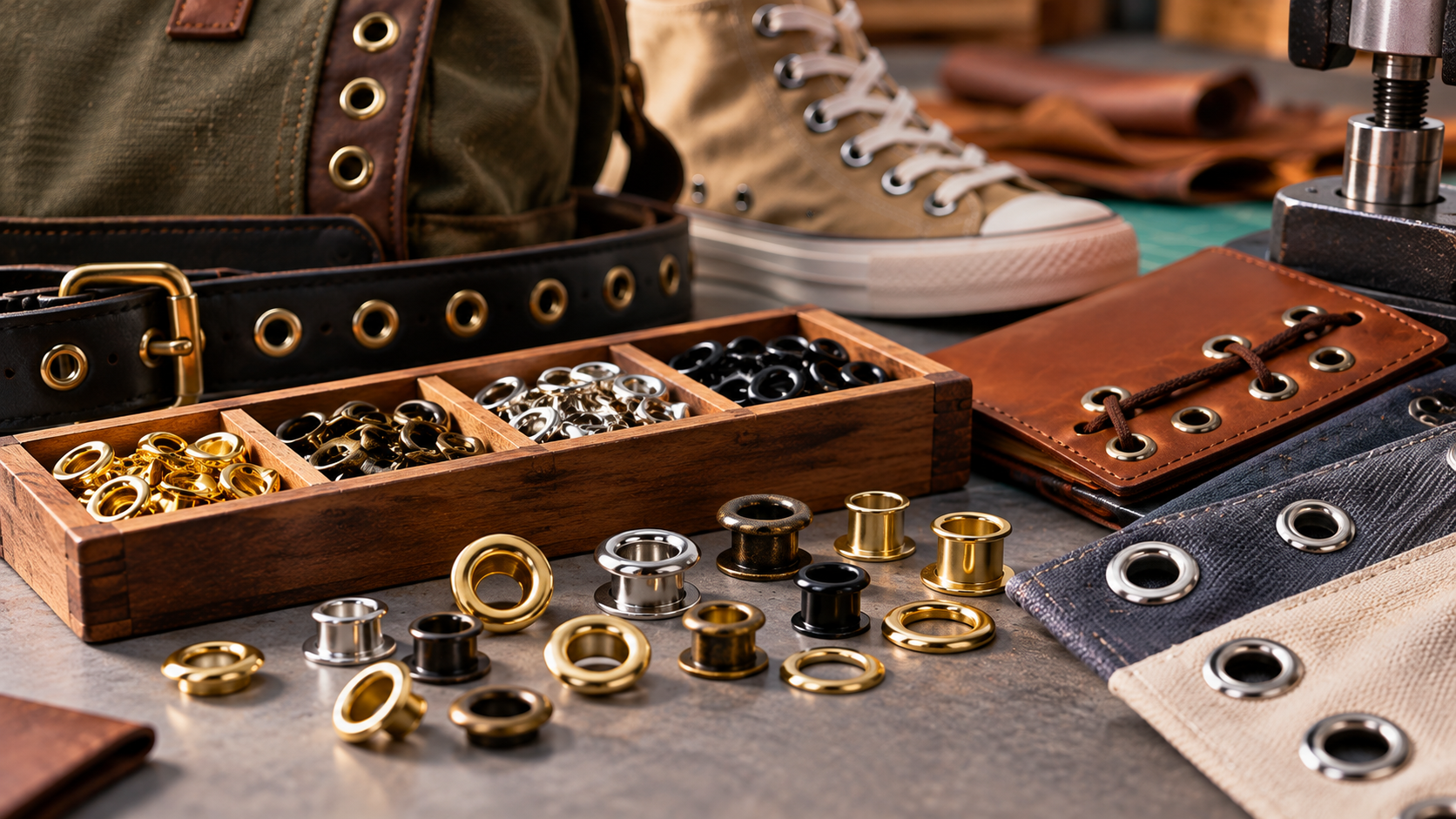
Nickel gives a bright, neutral look. Black nickel and antique finishes read darker and suit leather and heavier garments. Lacquer and powder coating add colour or a protective layer, and each one changes the price.
Humidity is where finish gets tested. In a coastal or monsoon-heavy market, a plated steel eyelet and a stainless one can look identical on day one and very different by August. Tell your supplier where the finished product will be sold, not just where it’s made.
Matching the type to the job
- Stationery, tags and lighter fabrics: aluminium, for weight and value at volume.
- Footwear, leather goods and fashion garments: brass, where the finish is seen.
- General utility and packaging: steel, with a suitable finish.
- Outdoor, damp or heavy industrial use: stainless steel.
- Tarpaulins, covers and banners: tarpaulin eyelets in aluminium/steel or brass.
Mixed lines are common. A garment brand might use aluminium on inner labels and brass on the outer trim. If you are unsure, describe the product and the load it carries before asking for a price. A sensible supplier will ask you about that first.
What to check before a bulk order
India has no shortage of suppliers, so the difference usually comes down to how carefully you check. Ask for physical samples and test them yourself. Hang a weight from one, scratch the finish on another, and leave a third somewhere damp for a few days.
Compare the weight per 1,000 pieces across batches, too. If it drifts, the material thickness probably has. And ask this directly: Do you make these in-house or source them from partners, and how do you keep batches consistent? A straight answer is worth more than a polished one.
Ask about repeat orders as well. Sizing that matches the first lot and wanders by the fifth is the cost that never shows up on a quote.
Simran Eyelets is a trading house. We source from established manufacturers and keep stock across aluminium, brass, steel, stainless steel and tarpaulin eyelets. The same team also supplies punching machines and precision dies, so you can go to one place for material and equipment questions.
The right eyelet usually becomes obvious once you know the load, the look you want and the hole size. When you compare a metal eyelet manufacturer in India against the alternatives, send your sizes in millimetres and ask for samples before you commit. We’re happy to help match the material to your product, with stock ready for dispatch.