A shoe can have a premium upper, a durable sole, and excellent stitching, but one small component can still affect how the finished product performs: the eyelet.
Shoe eyelets may seem like a minor part of the overall construction, but they sit in one of the most frequently used areas of the shoe. Every time the wearer tightens or loosens the laces, pressure is applied around the lacing holes. If the eyelets are poorly made, incorrectly sized, or not set properly, the upper can tear, the eyelet can loosen, or the finish can begin to deteriorate.
For footwear manufacturers, sourcing the right eyelets is therefore not just about appearance. It is about durability, production consistency, and the long-term performance of the finished shoe.
This article looks at how eyelets are used during footwear manufacturing, the different types and materials available, and factors that influence their quality on the production floor.
What an Eyelet Does in a Shoe
An eyelet is a small element fitted into the upper of a shoe at the points where the laces pass through. While its fundamental function is to create a secure opening for the lace, it plays several important roles in the overall construction of the shoe.
Reinforces the lacing holes: Materials such as canvas, fabric, mesh, and even leather can gradually weaken around an untreated lace hole. The eyelet helps reinforce the area and reduces the chances of tearing or fraying caused by repeated tension.
Allows smoother lace movement: A properly finished eyelet creates a smooth surface for the lace to move through. This makes tightening and loosening the shoe easier while reducing unnecessary wear on the lace.
Distributes lacing pressure: When a shoe is tightened, force is applied repeatedly across the lacing area. Eyelets help spread this pressure more evenly around the hole rather than allowing it to concentrate directly on the upper material.
This is why eyelet placement is usually considered during footwear pattern development itself. The spacing, size, and type of eyelet can influence both the fit and the durability of the shoe.
A poorly selected or incorrectly installed eyelet may seem like a small issue during production, but it can become a noticeable defect once the shoe reaches the customer. Eyelets Fit in the Manufacturing Process: Eyelets are generally installed during the upper manufacturing stage, before the completed upper is moved forward for lasting and sole attachment.
The process typically involves the following stages:
Upper cutting and pattern marking: Eyelet positions are determined according to the shoe pattern and lacing design. These locations are marked before the upper moves to the next stage.
Hole punching: Holes are created at the marked locations using appropriate punching tools. The hole size needs to match the dimensions of the eyelet being used.
Support backing: Lightweight materials such as canvas, mesh, and thinner leather may require additional reinforcement around the eyelet area. A backing material or reinforcement tape can provide a stronger surface for the eyelet to grip.
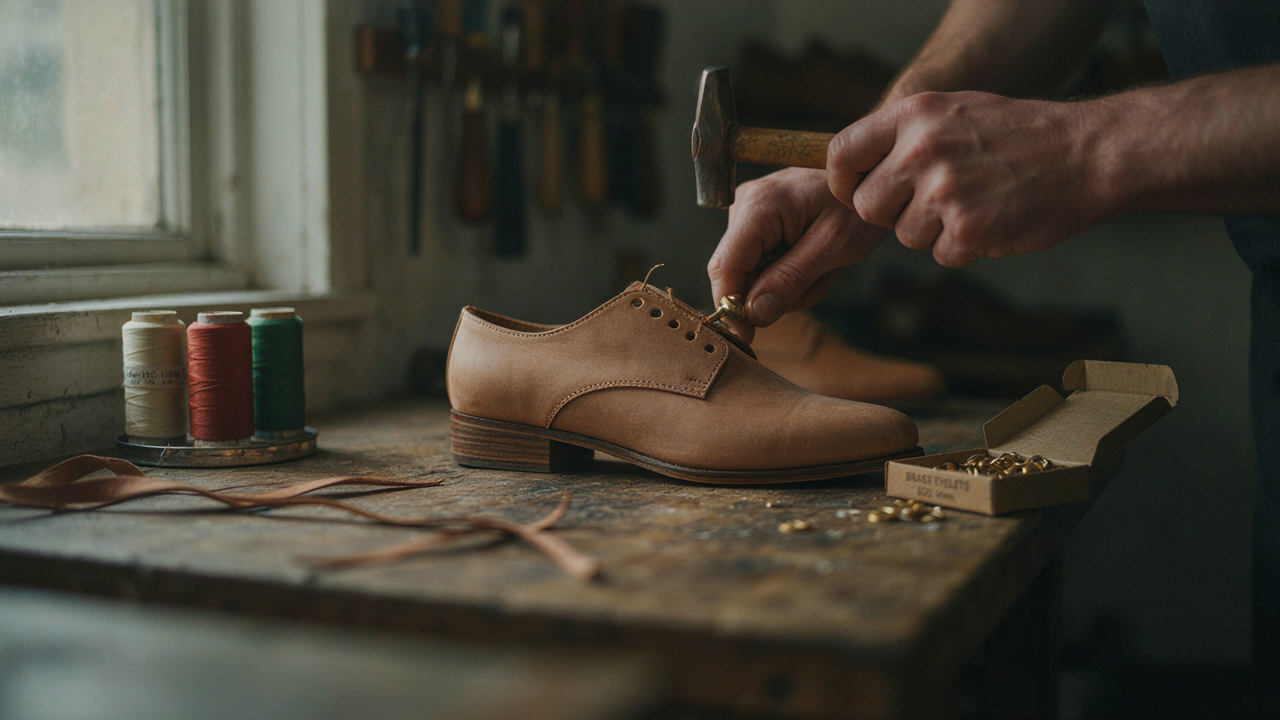
Eyelet setting: The eyelet is inserted through the punched hole and attached using the appropriate setting process. Depending on the eyelet design, the shank may be rolled, split, or compressed to create a firm hold.
Quality check: The finished eyelet is inspected to ensure it sits properly, has not damaged the surrounding material, and provides a consistent hold.
This is where shoe eyelet manufacturing connects directly with footwear production. Even a high-quality eyelet needs to be matched with the right tooling and setting process. Dimensional accuracy, material thickness, and shank strength all affect how consistently the component performs during production.
Types of Eyelets Used in Footwear
Different types of footwear require different eyelet designs. A lightweight sneaker, for example, does not place the same demands on an eyelet as a work boot or a hiking shoe.
Some of the commonly used options include:
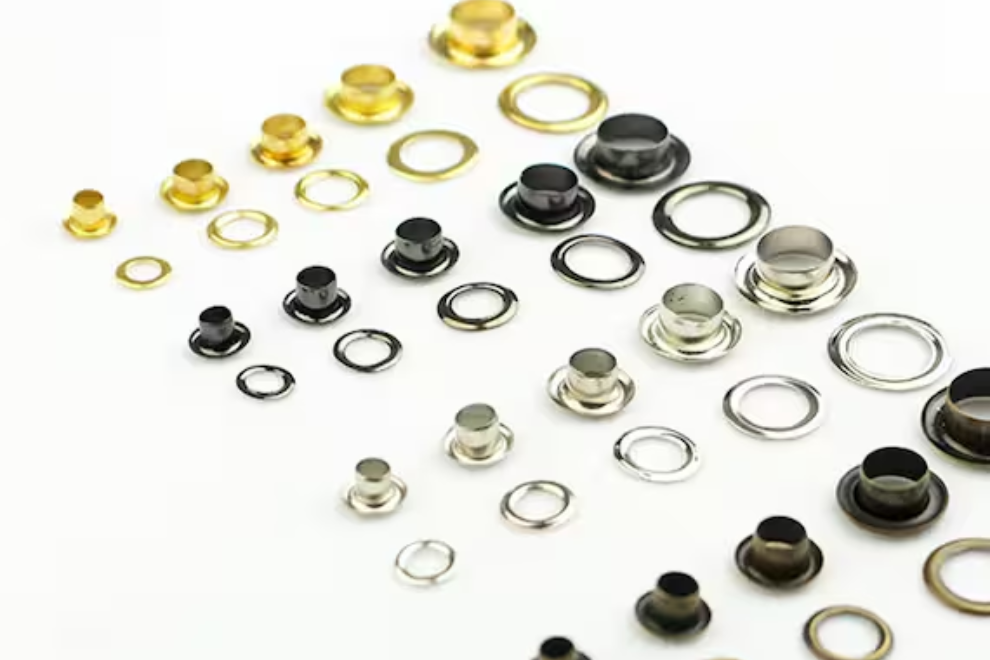
- Split (rolled) eyelets: These are widely used in sneakers, casual footwear, and boots. During setting, the shank is rolled or split to grip the upper securely. They are practical, economical, and suitable for large-scale production.
- Solid or telescoping eyelets: These provide a cleaner and more refined appearance and are often preferred for premium footwear where the visible finish is an important part of the design.
- Hexagon and speciality-shaped eyelets: These are commonly selected for specific footwear designs, including work boots and outdoor shoes. Apart from their functional role, they can also contribute to the prevalent visual identity of the product.
- D-ring and hook-style fittings: While these are technically different from traditional eyelets, they are often used alongside them, particularly in boots and technical footwear. They allow quicker lacing and are useful in designs where ease of adjustment is important.
The right option depends on the footwear category, upper material, lace design, expected usage, and the overall look the manufacturer wants to achieve.
Materials: Why the Metal Choice Changes the Outcome
The material used for an eyelet has a direct impact on its potency, appearance, corrosion resistance, and suitability for different types of footwear.
Aluminium eyelets are lightweight and commonly used in applications where reducing overall shoe weight is important. They are often suitable for canvas shoes, sports footwear, and other lightweight designs. Aluminium is also a cost-effective option, although it may not be appropriate for applications involving continuous heavy stress.
Brass eyelets are widely preferred where appearance and corrosion resistance are important. They offer a premium finish, accept plating well, and are commonly used in leather shoes, fashion footwear, boots, and premium sneakers.
Steel eyelets provide good strength and can be a practical option for general-purpose footwear. However, proper surface treatment or plating is important to protect the material from rust and corrosion, particularly in humid environments.
Stainless steel eyelets are well suited for demanding applications such as industrial footwear, work boots, hiking shoes, and outdoor footwear. Their resistance to corrosion makes them exceptionally useful where the shoe may be exposed to moisture, sweat, mud, or other harsh conditions.
Choosing the right material is not simply a matter of selecting the lowest-cost option. Manufacturers need to consider how and where the footwear will be used. A component that performs well in a lightweight casual shoe may not be suitable for a heavy-duty work boot.
How Eyelets Are Set: The Machinery Behind the Process
Eyelet setting requires the right combination of machinery, tooling, and controlled pressure. The choice of equipment often depends on production volume and the type of eyelet being installed.
Manual eyelet punching machines are commonly used for smaller production runs, sampling, repairs, and workshops where flexibility is more important than speed.
Semi-automatic machines present a balance between productivity and control. They can be suitable for medium-scale manufacturing operations that require consistent output without moving to a fully automated setup.
Fully automatic setups are designed for large-scale production environments where thousands of units need to be processed consistently. Automation can help improve speed and maintain uniformity when the tooling and machine settings are properly configured.
The press plays an important role in the setting process because it applies the force needed to secure the eyelet into the material. The amount of pressure required depends on the eyelet’s size, material, and construction, as well as the thickness and type of upper material.
Using incorrect tooling or excessive pressure can damage the eyelet or the upper. Too little pressure, on the other hand, can result in a loose setting. Matching the press, die, and eyelet correctly is essential for achieving consistent production quality.
What Causes Eyelet Failures in Footwear
Most eyelet-related problems can be traced back to a few common manufacturing or sourcing issues.
Thin or inconsistent material thickness: An eyelet made from poor-quality material may crack during setting or loosen after repeated use.
Poor plating quality: Weak plating can peel, flake, or lose its finish over time, affecting both appearance and corrosion resistance.
Incorrect tooling: If the die or press is not suited to the size and material of the eyelet, the component may not set correctly.
Insufficient reinforcement: Lightweight uppers may require additional support around the eyelet area. Without it, the material can tear even when the eyelet itself is properly installed.
Incorrect sizing: A mismatch between the punched hole and the eyelet dimensions can affect the grip and stability of the finished component.
These issues may not always be obvious during an initial visual inspection. In some cases, they only become apparent during wear testing or after the footwear has already reached the market.
That is why footwear manufacturers need to consider more than the price of the component. Consistent dimensions, reliable material quality, suitable tooling, and application-specific knowledge all contribute to a better final product.
Getting Eyelets Right for Your Footwear Line
Eyelets may be small, but their role in footwear construction is significant. They influence the durability of the lacing area, the ease of use of the shoe, and the overall finish of the product.
Getting the material, design, size, and setting process right from the beginning can help manufacturers reduce production issues, avoid unnecessary rework, and maintain consistent product quality.
Simran Eyelets Pvt Ltd. supplies aluminium, brass, steel, and stainless steel eyelets for a wide range of industrial applications, including footwear manufacturing. The company also provides punching machinery and precision dies that support accurate and consistent eyelet setting.
For footwear manufacturers planning a new production run, selecting the right eyelet should begin with understanding the shoe category, upper material, expected usage, and production requirements. The right combination of component and tooling can make a meaningful difference to both manufacturing efficiency and the long-term performance of the finished footwear.